
The Church of Our Lady of the Rocks and the tradition of 1452
The Church of Our Lady of the Rocks stands on Gospa od Škrpjela, an island off Perast enlarged by depositing stones and old ships around a sea reef. The island's construction and its religious purpose belong together: the expanded reef provided a place for a votive chapel, linking the site to gratitude and seafaring rather than simply creating a viewpoint in the bay.
The date 22 July 1452 belongs to the island's founding tradition. Read it as the beginning of a remembered story, rather than the completion date of the buildings seen today. That distinction helps explain why the church contains work from different periods. An island visit can bring together the exterior, the painted interior and the treasury, provided the chosen boat stop allows for that kind of visit.
Building phases of the island church
Our Lady of the Rocks developed through several building phases, including an eighteenth-century domed choir. Ilija Katičić's design began in 1720, with the work completed in 1722. Those later additions are part of the present ensemble, so the church is more rewarding when considered as a building shaped over time than as a monument to one construction date.
The Catholic church sits within the wider heritage landscape of the Bay of Kotor. UNESCO's inscription covers the Natural and Culturo-Historical Region of Kotor; the island church is not a separate World Heritage inscription. For the boat arrangements that make an interior visit possible, see island access from Perast and Kotor.
Church and museum excursion
This combination includes the island boat, church and museum tickets and a cable car ride.
Hand-picked tours, booked through GetYourGuide. Prices are indicative starting prices in euros (as of November 2026). Tap a tour for live availability and the current price in your currency.
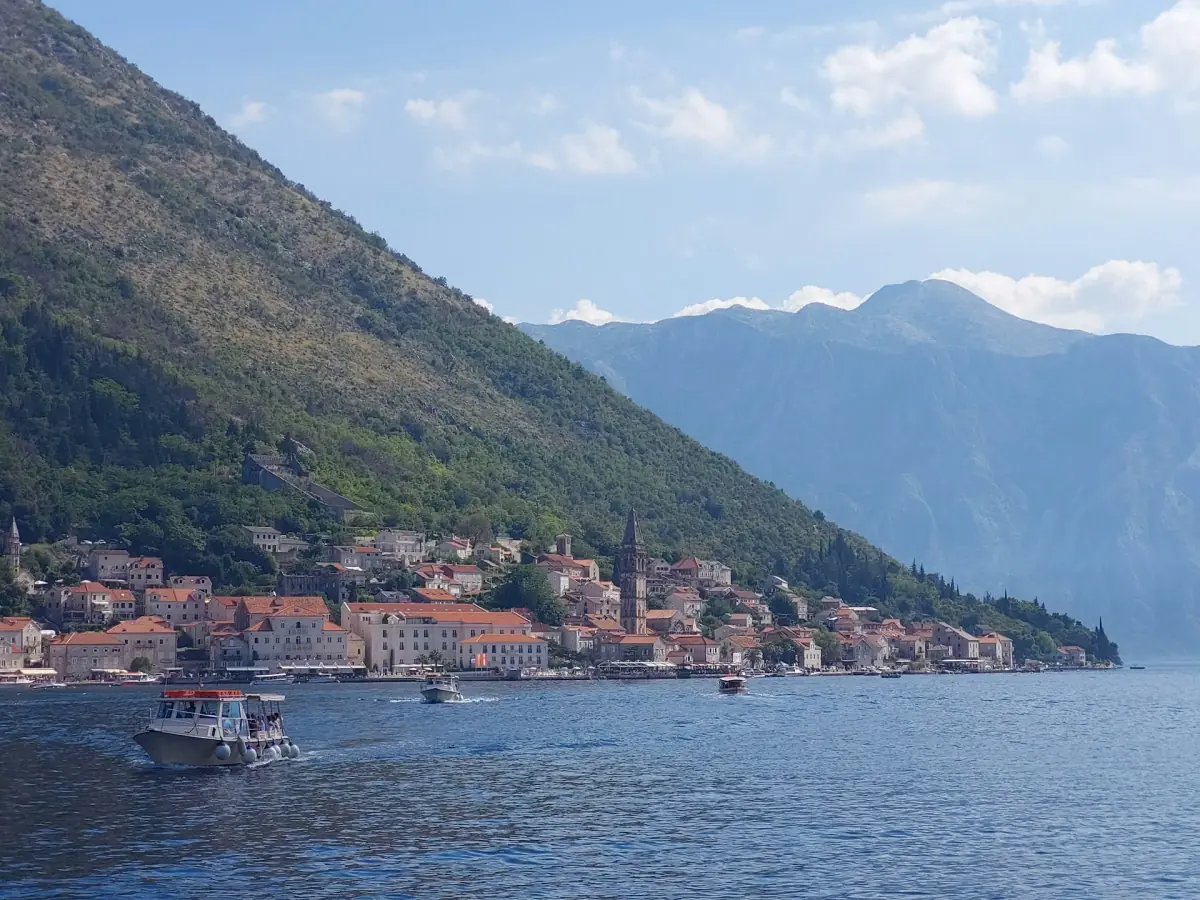
Island art within a wider Kotor outing
The cable-car and Perast combination includes the island boat journey and admission to the church and museum, alongside the cable-car ride.
Kokolja's paintings and sailors' votive gifts
Tripo Kokolja's paintings in Our Lady of the Rocks depict the lives of Mary and Christ. Kokolja was born in Perast, connecting the church's artistic programme directly with the town across the water. Look for the relationship between wall paintings and the ceiling, rather than treating each framed image as an isolated picture.
The subjects include the Death of the Virgin on the walls, the Assumption on the ceiling and the Coronation of the Virgin above the sanctuary. Silver votive plaques and painted offerings bring a different kind of testimony: ships and scenes of danger at sea express sailors' gratitude. Their vessel imagery also preserves details of historical ship types, giving maritime history a place alongside sacred painting.
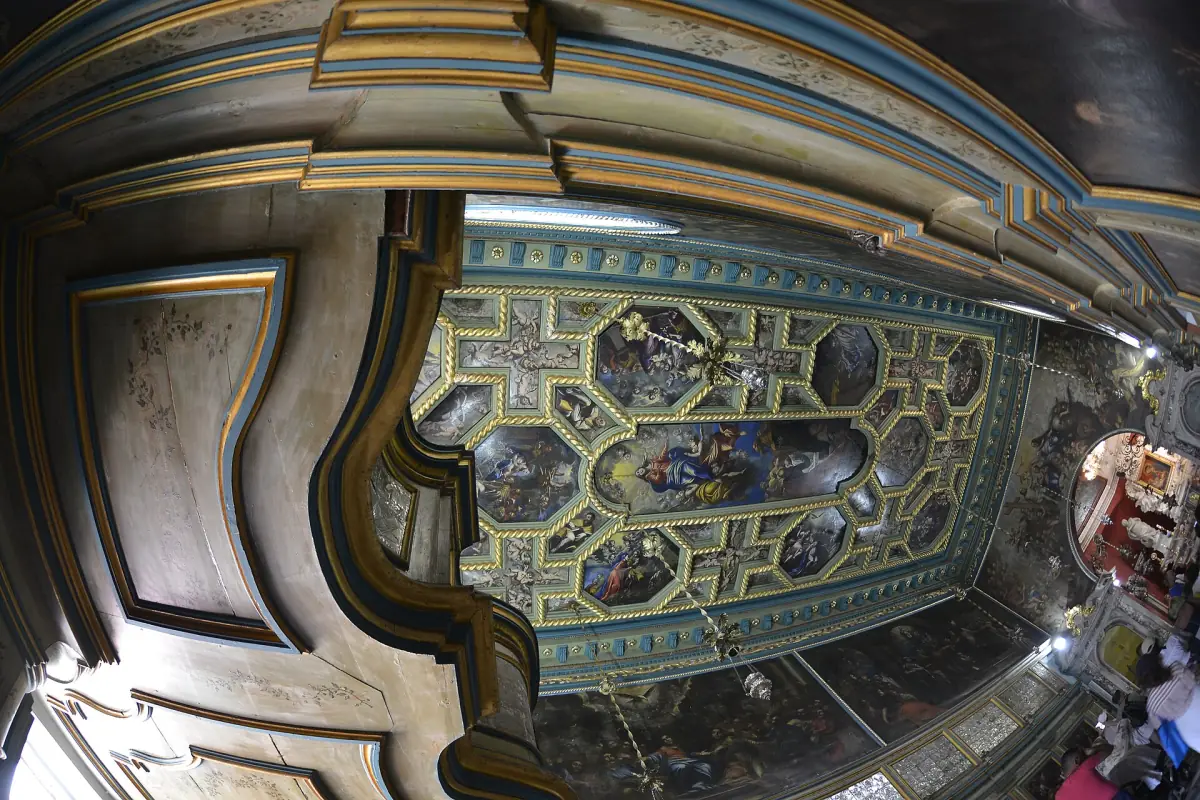
Jacinta Kunić and the island treasury
Jacinta Kunić's embroidery adds a personal object story to the visit to Our Lady of the Rocks. Montenegro's national tourism account describes her working on the piece from 1803 to 1828 and using her own hair among its materials. The account connects the embroidery with waiting for her seafaring husband.
The treasury also contains sculpture, medals, crafted objects and parts of sailing ships. Together, these objects widen the visit beyond the painted church. Keep the island museum separate in your plans from Perast's town museum: the mainland institution is another destination, rather than another name for the collection reached by the island boat.
Fašinada and maritime gratitude
Fašinada recalls the building of Gospa od Škrpjela through a procession of stone-laden boats to the island. The boats are linked together, decorated with apple branches and taken out at sunset, when stones are thrown into the surrounding water. The ceremony makes the physical enlargement of the island part of an enduring maritime tradition.
The calendar date of 22 July 2026 has passed. Treat Fašinada as a cultural context for the visit and consult the season and visit-planning guide if the ceremony is your main reason for travelling. A normal sightseeing cruise is a different experience from participating in the traditional procession.
Visiting the church and museum
The Kotor cable-car and Perast outing includes the boat to Our Lady of the Rocks, church and museum admission, an English-speaking driver-guide and a cable-car ride. Its listed duration is four and a half hours and its departure is at Kotor harbour. Choose it for that combined day, rather than expecting a dedicated church-only art tour.
For other boat outings, separate island landing from interior admission when selecting the visit. Arrange the church access and return boat for your day, especially when art is the main purpose of the stop. Respectful clothing and a considerate manner are recommended for the sanctuary. Allow attention for the objects as well as the water views; the island's interest continues beyond the exterior photograph.
Church of Our Lady of the Rocks: questions
What does the date 1452 mean?
1452 belongs to the founding tradition of Gospa od Škrpjela, specifically 22 July. The date does not describe the completion of the present church ensemble. Stones and old ships enlarged a reef over time, while later building phases shaped the church visitors see during the island stop today.
What art should I look for inside?
Kokolja's paintings of Mary and Christ are central to the Church of Our Lady of the Rocks, alongside maritime votive plaques and pictures. The treasury adds sculpture, medals, crafted objects and ship parts. Jacinta Kunić's embroidery offers another focus, with its object story connected to a seafaring household in Perast.
Does the cable-car outing include the island museum?
Yes, the Kotor cable-car and Perast outing includes admission to the church and museum as well as the boat journey to Our Lady of the Rocks. The cable-car ride and English-speaking driver-guide are also included. The four-and-a-half-hour combination starts at Kotor harbour; food and drinks are extra.